
Do raised decks need railings?
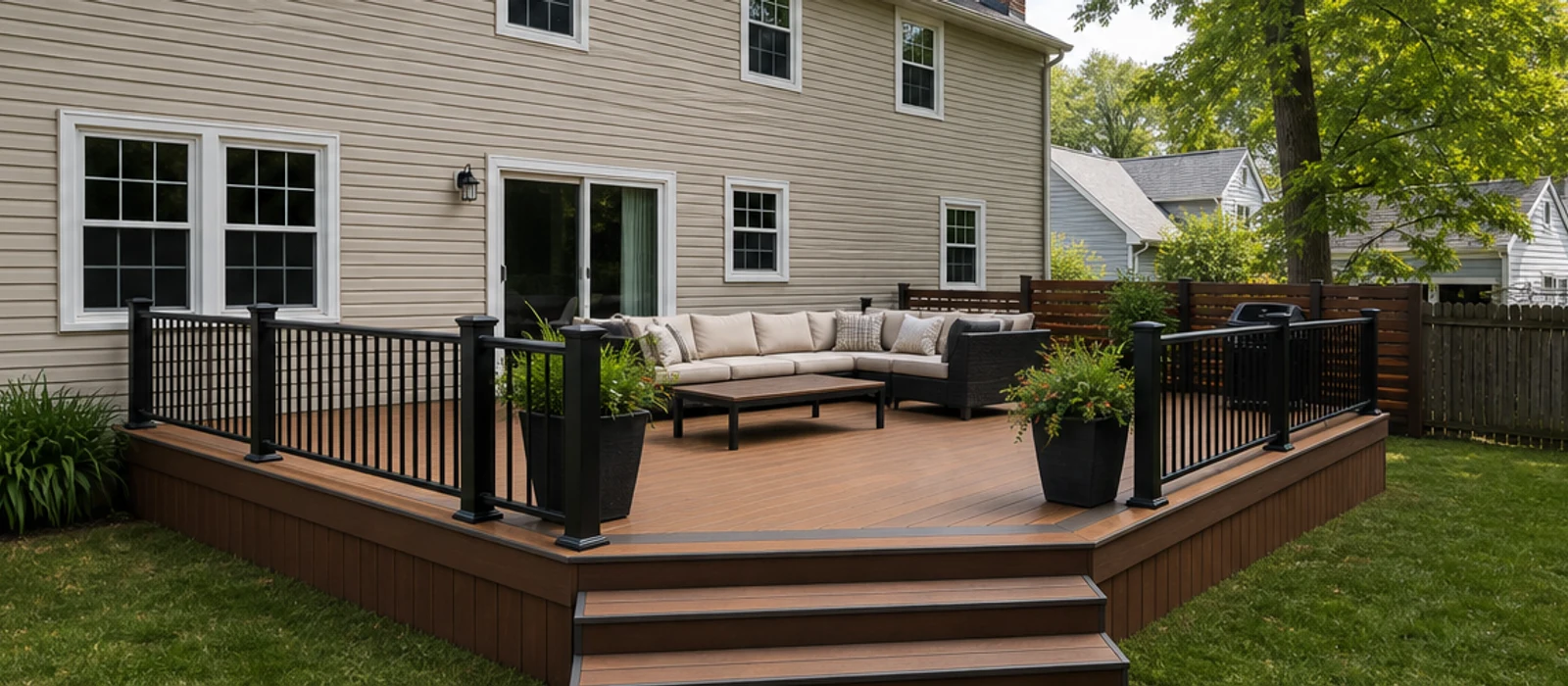
Raised decks usually need guardrails when the walking surface is high enough to trigger code requirements. Stair rails and landings should be planned with the deck.
Deck types
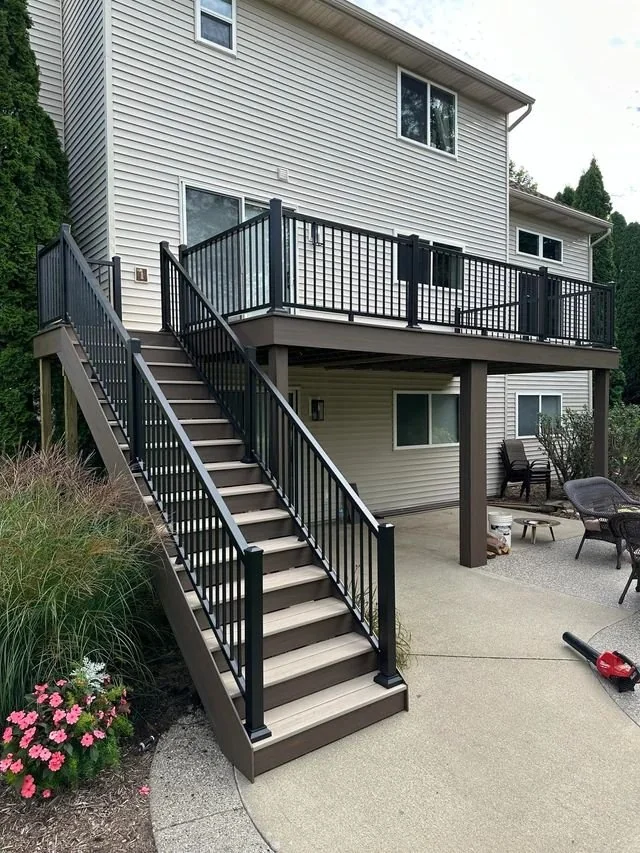
Raised decks are common on homes with high first floors, walkout basements and sloped yards, but they must be quoted around structure, stairs and guardrails.
Direct answer
Eager Beaver Decks builds raised decks in New Jersey and Staten Island with post, beam, stair, railing and permit planning before the fixed quote is approved. Call +1 (908) 402-4919.
Raised decks usually need guardrails when the walking surface is high enough to trigger code requirements. Stair rails and landings should be planned with the deck.
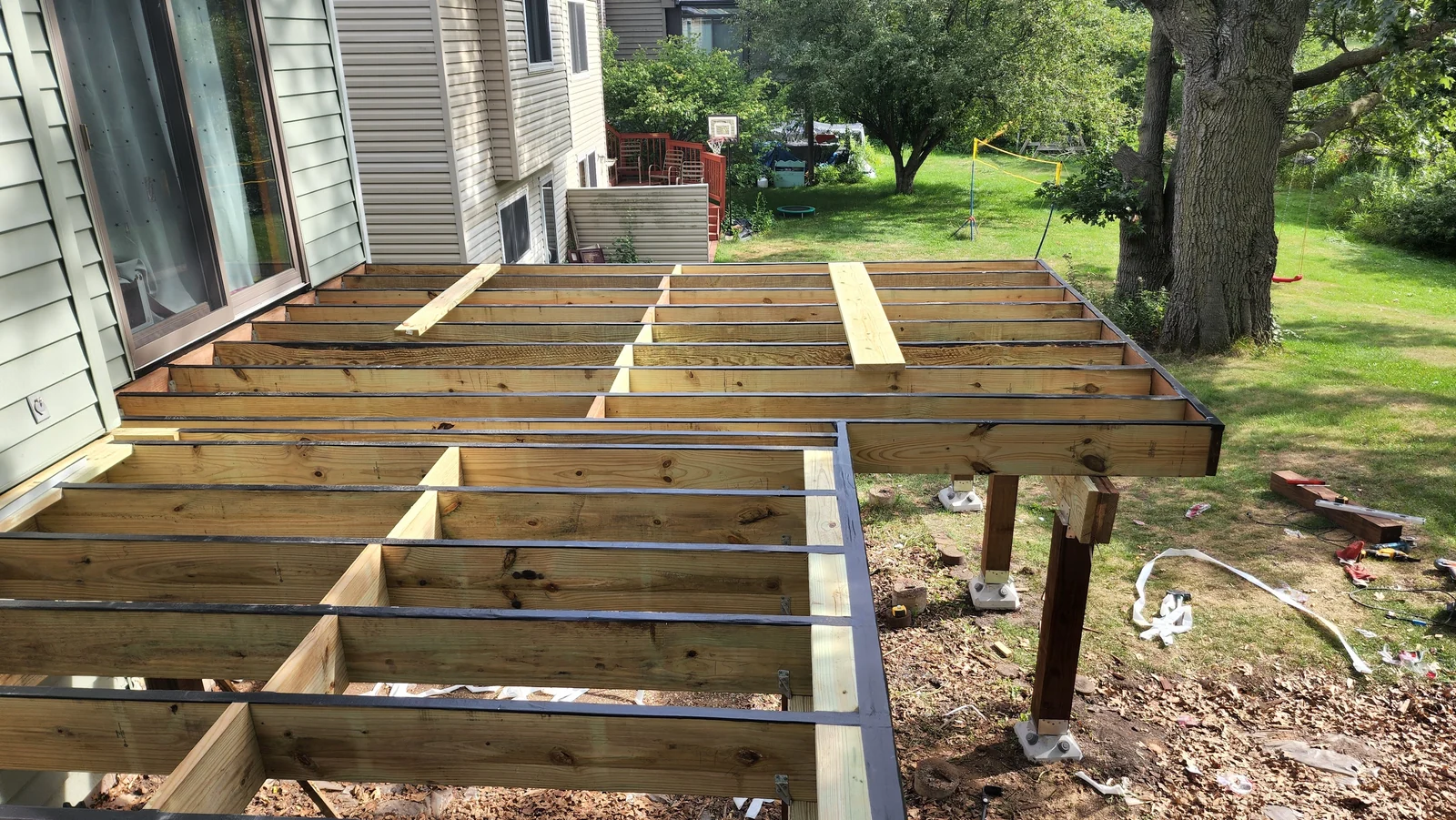
Raised decks cost more because posts, beams, footings, stairs, railings, bracing, inspections and access complexity become part of the scope.
Budget
Usually higher than ground-level decks because structure, stairs and railings dominate the quote.
Lifespan
Lifespan follows the material and structural detailing. Ledger flashing, post bases and drainage are critical.
Maintenance
Inspect railings, stairs, posts, fasteners and ledger flashing regularly. Raised decks expose safety issues faster.
Permit note
Raised decks commonly require permit review, guardrail planning, stair geometry and inspections.
Planning guide
Eager Beaver Decks builds raised decks in New Jersey and Staten Island with post, beam, stair, railing and permit planning before the fixed quote is approved. Call +1 (908) 402-4919. The right scope still has to account for budget, structure, railings, stairs, maintenance, permit assumptions, access and the way the deck will be used after the contractor leaves.
Most homeowners start with a simple question and then discover that the details matter. A pressure-treated deck, a Trex-style composite deck, a TimberTech or PVC/AZEK deck, a raised deck with black aluminum railings and a repair-first project can all be right in different situations. The wrong choice is usually the one that hides important assumptions until the end of the estimate.
The local market matters. Homes where the back door sits above grade and the deck needs posts, beams, stairs and code-compliant railings. In New Jersey and Staten Island, the same deck photo can price differently because of access, demolition, township or NYC paperwork, stair count, railing length, board line, disposal, framing repairs and how the project connects to the house. A serious quote should explain those drivers before work starts.
Quick answer
Eager Beaver Decks builds raised decks in New Jersey and Staten Island with post, beam, stair, railing and permit planning before the fixed quote is approved. Call +1 (908) 402-4919.
Read the raised deck guideUse a raised deck when the house elevation or yard slope demands a structure above grade and the homeowner wants a safe outdoor room at door level. A better estimate starts by defining the use case. Is this a simple grill platform, a family dining space, a raised door-level deck, a repair to keep an older deck safe for a few more years, or a premium backyard upgrade meant to support resale and daily use? When that intent is clear, the material and railing conversation becomes much more honest.
The important move is to reject fake simplicity. A deck is not just boards. It is a structure attached to a house or sitting on footings, a walking surface, a stair path, a railing system, a drainage condition and a maintenance commitment. A quote that skips any of those categories can look cheap on day one and become expensive later.
Lifespan follows the material and structural detailing. Ledger flashing, post bases and drainage are critical. That planning range should never be read as a guarantee without context. Lifespan changes with sun exposure, water, shade, airflow, fasteners, framing, cleaning, snow removal, furniture, grill placement and whether the deck is repaired before damage spreads. The best contractor conversation is not "what is the cheapest board?" It is "what material matches the way this family will actually use and maintain the deck?"
Inspect railings, stairs, posts, fasteners and ledger flashing regularly. Raised decks expose safety issues faster. Raised decks usually dry better than low decks, but stair stringers and ledger areas still need protection. These details matter in this market because many NJ yards have mature trees, shaded corners, mulch beds against deck edges, winter snow, humid summers and tight side-yard access. Staten Island can add NYC paperwork, smaller staging areas and a higher penalty for messy demolition logistics. The surface material should be chosen with those realities in mind.
A quote is only useful when it can be audited. The homeowner should be able to see what is included, what is excluded, what still needs field verification and what choices would change the price. That is how you compare a real fixed quote against a vague low number. For raised decks, the estimate should document the facts below before anyone orders boards, railings or specialty hardware.
Photos can help the first conversation, but they are not a pricing shortcut. Wide photos can show access, door height and yard conditions. Close-ups can show boards, joists, railings, stairs, ledger areas, fasteners and water damage. Rough dimensions help the first estimate pass, while final pricing still depends on scope, site conditions and field verification when structure, permits or safety are involved.
The most expensive deck surprises usually come from details the first conversation did not include. A homeowner may think the price is only about square footage, but stairs, railings, demolition, framing repair, hidden fasteners, fascia, picture-frame borders, post blocking, gates and permit work can change the quote quickly. A clean proposal makes those drivers visible.
This is also where a vague idea becomes a real buying decision. Someone asking about Trex decks in NJ, black aluminum railings on Staten Island, raised deck stairs or pressure-treated decking with vinyl railings is not looking for a generic outdoor living brochure. They need the contractor to explain the package, the tradeoffs and the conditions that will change the final number.
Raised decks commonly require permit review, guardrail planning, stair geometry and inspections. Permit requirements vary by town, scope and attachment, so this page cannot replace local code review. What it can do is define the right mindset: any deck that changes structure, height, stairs, guardrails, ledger attachment, footings or porch conditions should be discussed as a permit-aware project before build dates are promised.
Safety is not an upsell. Loose railings, soft stair stringers, questionable ledger flashing, undersized posts, water-damaged joists and missing blocking can turn an attractive surface upgrade into a liability. That is why the quote should separate cosmetic work from must-fix structural work. The best outcome is not always the biggest project. The best outcome is the scope that makes the deck safe, durable and worth the money.
The strongest market packages are simple to explain. Pressure-treated decking with white vinyl railings is the budget/traditional path. Composite or Trex-style decking with black aluminum railings is the mainstream upgrade path. TimberTech or PVC/AZEK-style decking with black aluminum, cable or glass railings is the premium path. Repairs sit beside all of those choices because older decks often need safety work before finish decisions.
This package should be priced with material, railings, stairs, framing assumptions, access and cleanup in the same scope so the homeowner can compare it honestly.
This package should be priced with material, railings, stairs, framing assumptions, access and cleanup in the same scope so the homeowner can compare it honestly.
This package should be priced with material, railings, stairs, framing assumptions, access and cleanup in the same scope so the homeowner can compare it honestly.
The cheapest deck mistake is the one caught before the deposit. Most bad deck decisions come from comparing incomplete quotes, selecting a board before checking the frame, treating railings as decoration instead of safety equipment or ignoring the way sun, shade and water behave in the actual yard. The list below is deliberately blunt because it is cheaper to solve these issues in the planning stage.
Local deck work only makes sense when it reflects the actual yard. New Jersey suburbs and Staten Island neighborhoods are not identical. A wide Monmouth County yard, a tight Union County driveway, an Essex County older home, a Somerset County premium backyard and a Staten Island side-yard access problem can all change the same deck scope. The contractor should ask about those conditions before pretending every project is standard.
The estimate should reflect those local conditions instead of using the same assumptions for every yard. Material choice, railing style, access, permits and cleanup all need to be matched to the actual home before a final scope is approved.
Before approving raised decks, ask what the contractor will prove in the proposal. A good answer should include scope, assumptions, materials, safety checks, access, cleanup and how changes are handled. The proof points below are the minimum standard for a quote that can be compared against another contractor.
Homeowners rarely start with perfect terminology. They ask about material, structure, railing, town, repair and permit details in the same conversation. These are the topics that usually need to be settled before booking an estimate.
Often yes. Height, attachment, stairs and structural changes commonly trigger permit review.
Black aluminum is the most common modern choice, while vinyl can work for budget-conscious projects.
Yes. Composite with aluminum railings is one of the most requested raised deck packages.
The right next page depends on what the estimate still needs to clarify. If the material is unclear, compare decking surfaces. If the structure is unclear, compare deck types. If the deck is raised or the railing is loose, review railing systems before approving the scope.
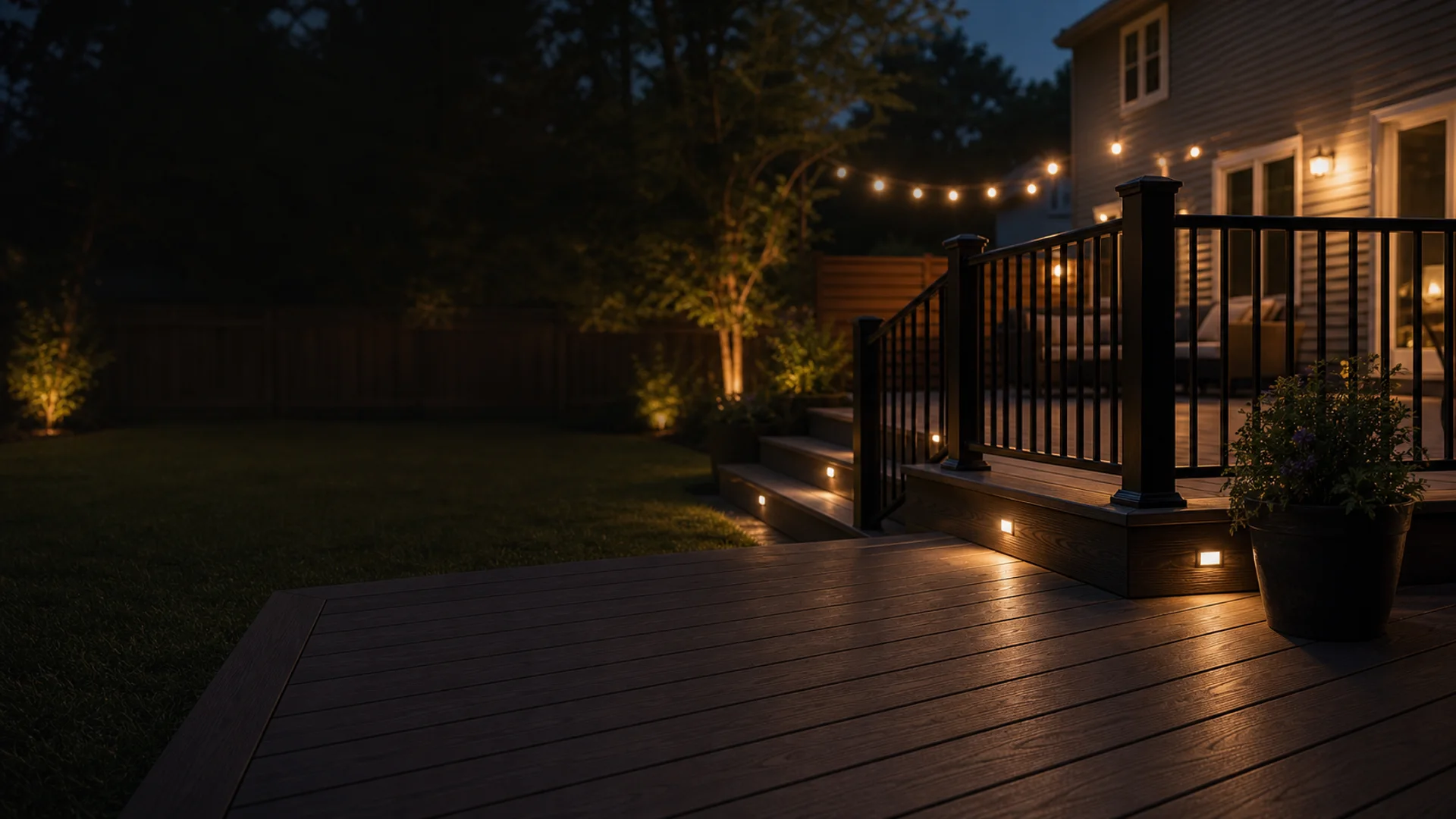
Free onsite estimates by appointment. Call or use the booking form and a real person will confirm the service area, scope and next available visit.
Built Eager. Built Right.
Tell us your ZIP, service type and best callback time. We will confirm whether the project fits the service area and schedule an onsite estimate.
hello@eagerbeaverdecks.com